

On Demand Trainings for Private Wealth Managers
online courses and simulations for relationship managers, advisors and team leads: FX and precious metals, anti money laundering, stakeholder management, margin calls and geopolitics. Built around real client situations.
Practice for the moments that decide the client relationship
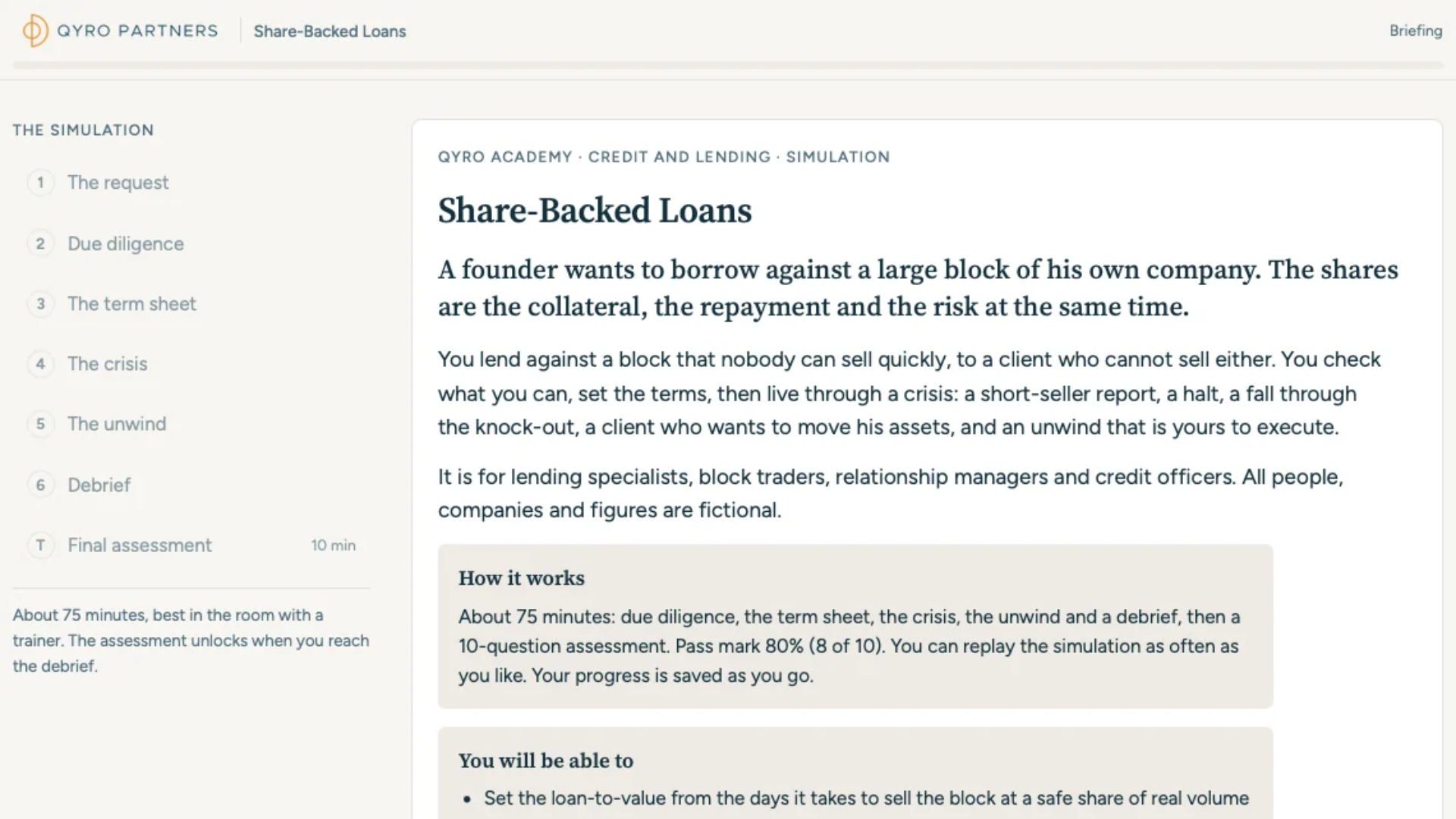
Keep the loan covered without losing the client. Margin calls are rare, so most relationship managers get little practice before the real one. When it comes, they ask for too little or too late, or push the client to sell at the worst moment. In this simulation, participants manage a client's Lombard loan, secured against cash, investment grade bonds and a concentrated technology stock, over seven trading days while markets move. Each day they decide whether to act, how much to ask for, and whether to add cash, sell positions or combine both. They are scored on two things, just like in the job: protecting the bank and keeping the client's trust.
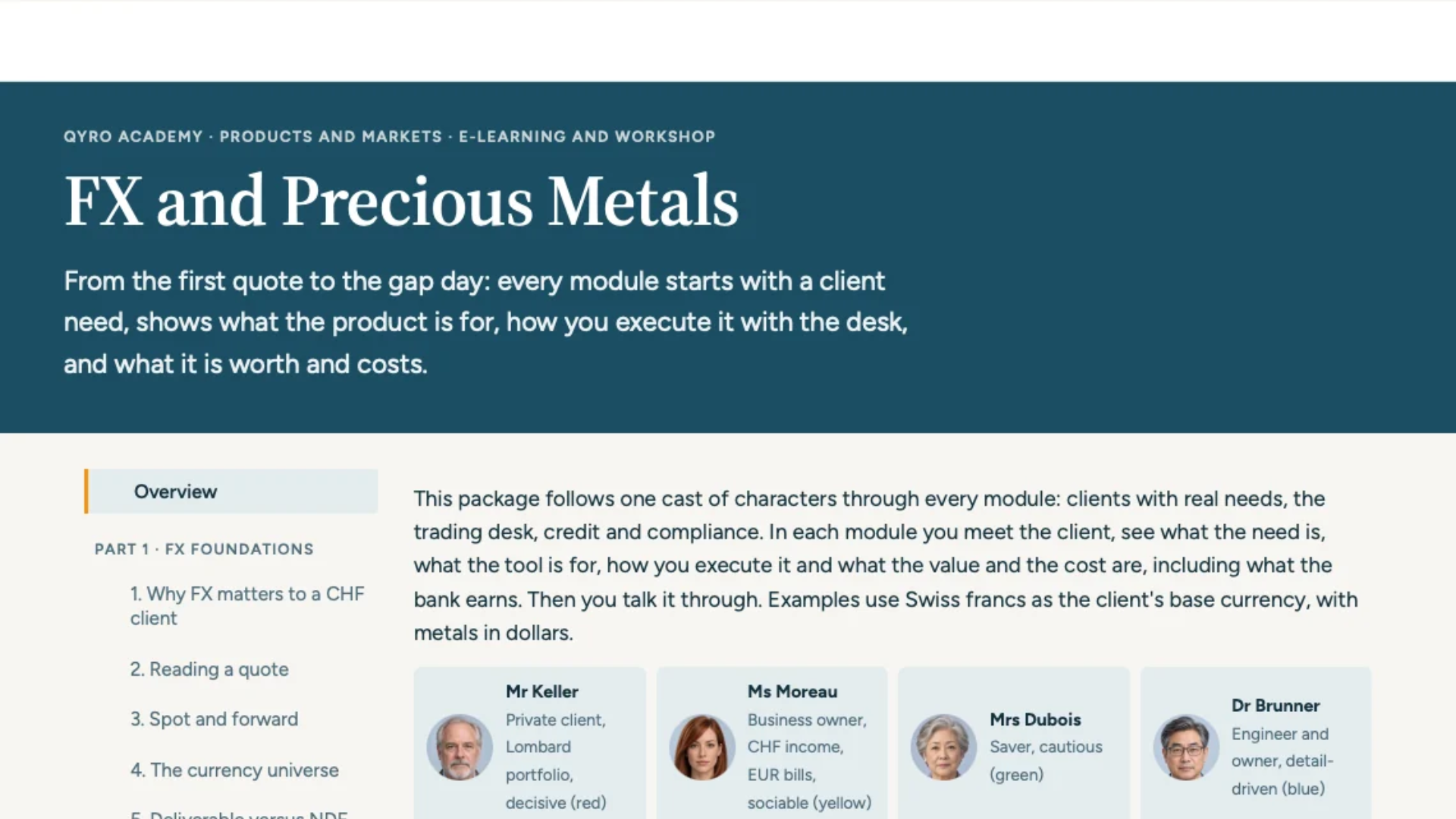
From the first quote to a bad day in the markets. Most relationship managers know the FX products. The difficulty starts when they have to explain them: a forward presented as a view on the market, or a zero cost structure sold without saying what the client gives up. This course takes participants from reading a quote and the basics of spot and forwards, through collars, FX swaps, accumulators and dual currency deposits, to gold and other precious metals for clients with any base currency. A historic currency shock serves as a case, and conduct runs through every part. Participants who complete Part 2 can join the FX Room, a trainer led workshop where they practise a hedge roll, a structured product case with compliance and a live drill on a day when markets gap.
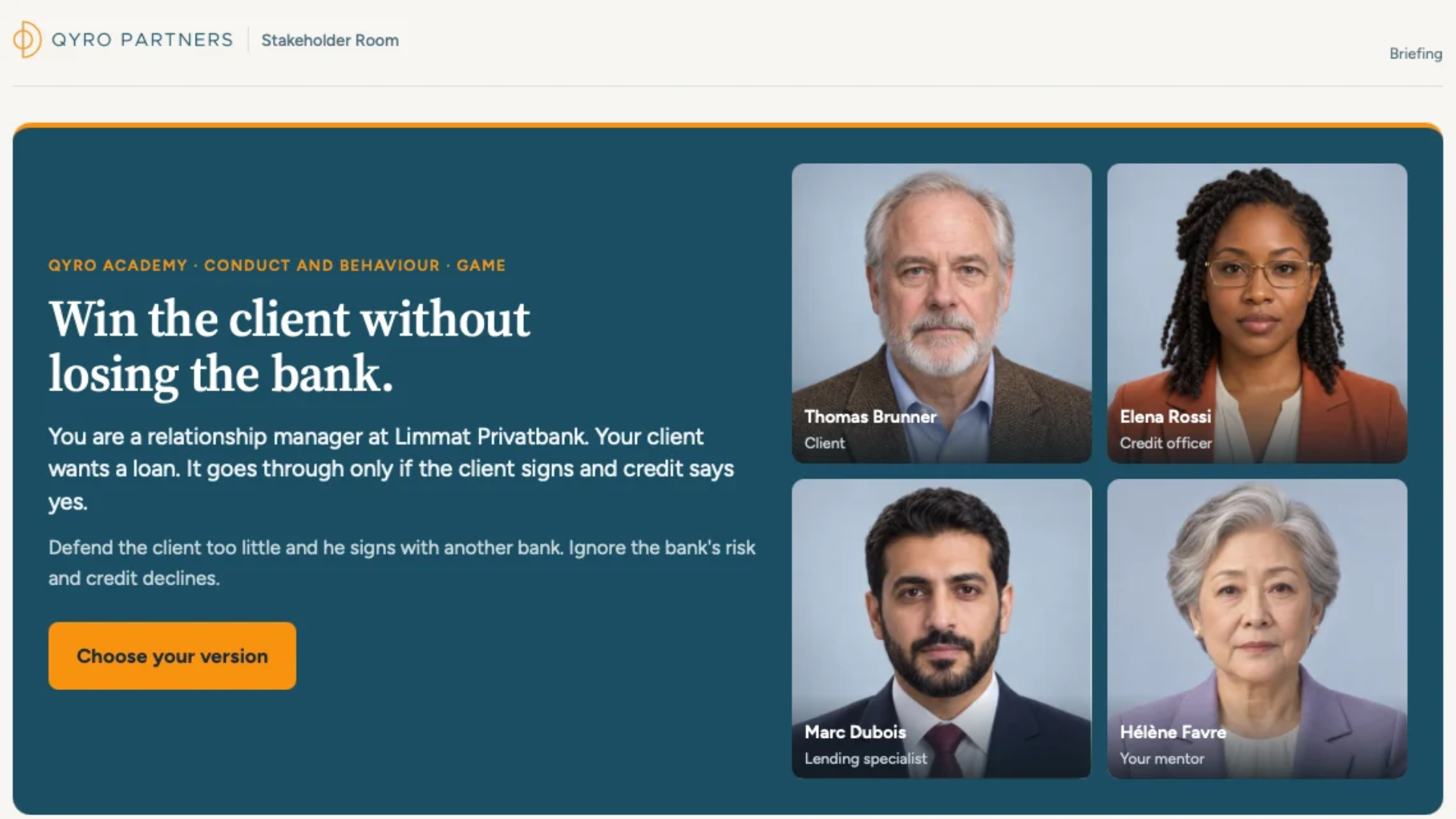
Win the client without losing the bank. Relationship managers negotiate in two directions at once. Push too hard for the client and credit says no. Give in to every internal concern and the client signs with another bank. In this game, participants secure a loan for their client while working with credit, a lending specialist, a rival colleague, compliance and their own manager. Every choice moves four scores: client trust, bargaining power, goodwill inside the bank and compliance risk. A senior RM comments on each decision and explains the stronger option. At the end, participants see their skills profile and get one concrete action to try with a real client that week.
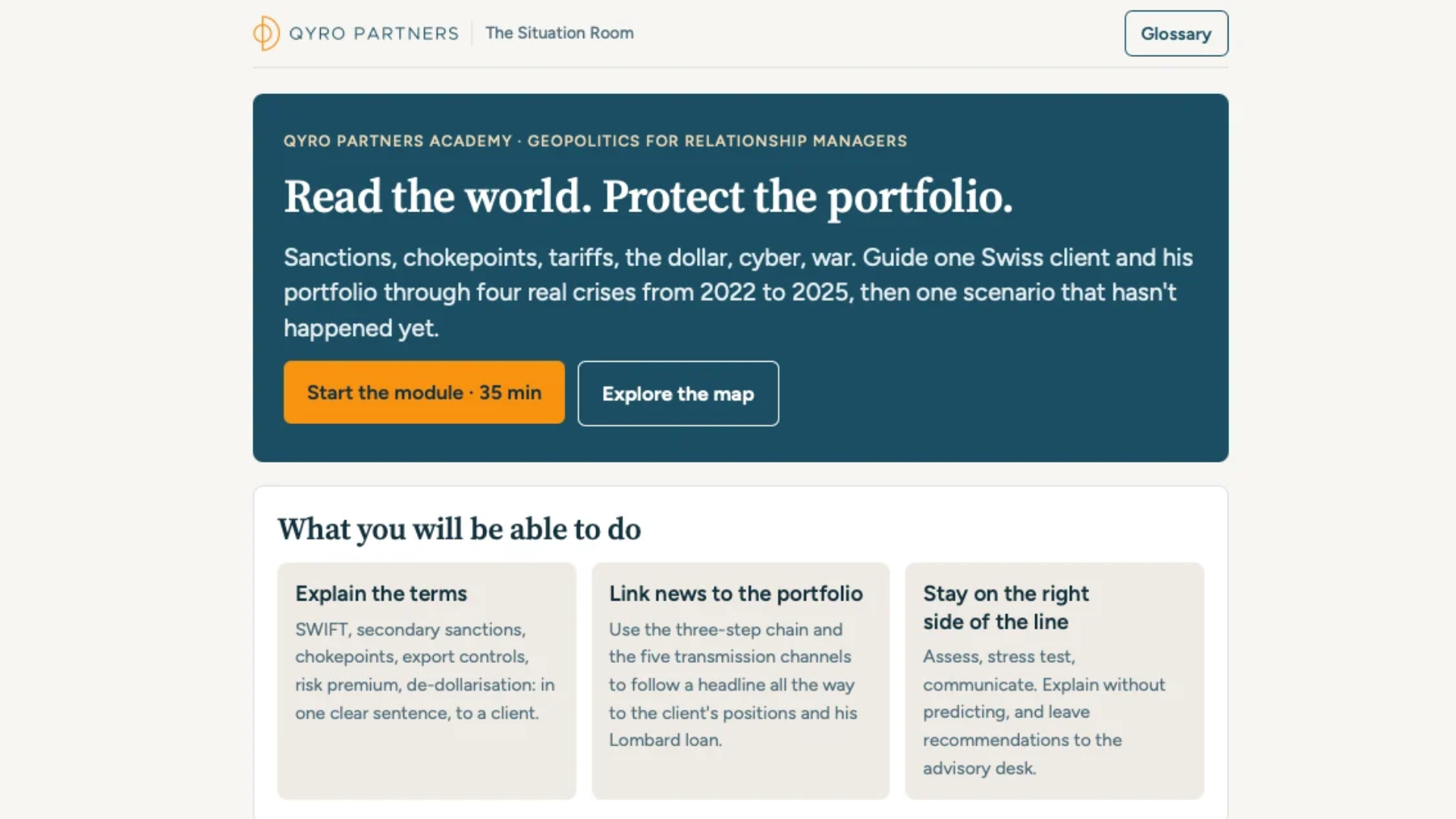
Read the world. Protect the portfolio. Sooner or later, every conversation about markets touches politics. Most RMs either avoid the topic or start guessing where the world is heading. In this simulation, participants guide one client through four real crises from 2022 to 2025: the war in Ukraine, a global technology outage, the tariff dispute between the US and China, and the conflict around the Strait of Hormuz. They then face a scenario that has not happened yet. Before each client call, a strategist briefs them on a live market screen. During the call, wrong explanations and promises about the future cost the client's trust. Participants learn a simple method that works for any headline, and to leave recommendations to the advisory desk.
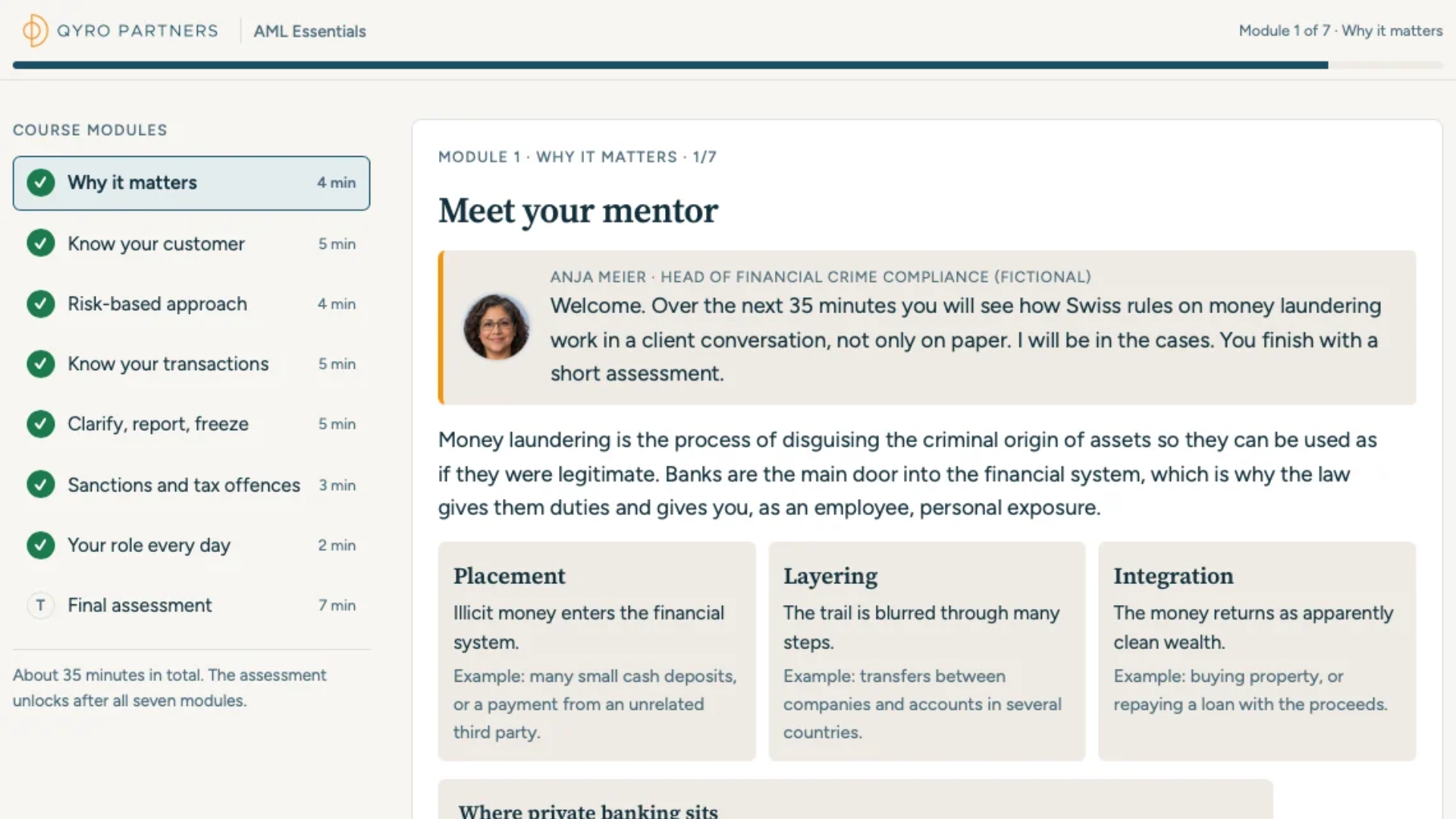
Anti money laundering, where it actually happens: in the client conversation. A new client wants to bring in five million and the paperwork looks fine. Would your team notice what does not add up? AML Essentials puts the rules into client situations instead of legal text. Participants learn to identify the beneficial owner, build a client profile that explains the source of wealth and the source of funds, apply a risk based approach and recognise red flags such as split payments. Three cases test what they have learned, including the hardest one: how to behave with a client two days after a report has been filed, without tipping him off. A fictional head of financial crime compliance guides participants through every section.
How the courses work
Cases, not slides. Every course is built around a realistic client or project situation. Participants decide what to do and see straight away why an answer works or not.
Short enough for a working day. Most courses take 30 to 60 minutes. The FX course is split into three parts that can be taken in order or one at a time.
Measurable results. Each course ends with an assessment or a score. Most issue a certificate of completion for your training records.
Online at any time. All courses run on Qyro Academy, so participants in different locations and time zones can take them when it suits them.